GEM & JEWELRY ARTICLE

How to Get a Custom Engagement or Cocktail Ring Designed Around a Rare Colored Gemstone

It is now easier than ever to design your own perfect one-of-a-kind ring and have it made with the colored gemstone of your choice. We show you how.

Nicky Thomas

Gemstone & Jewelry
Style & Trends Editor
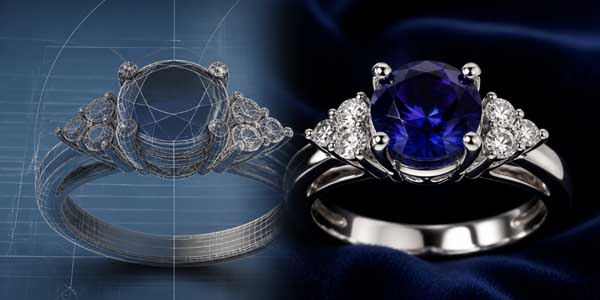
You can get a custom bespoke engagement or cocktail ring built around a rare colored gemstone from a specialist that cuts and sources the stone itself, then designs the setting to fit that exact gem. The Rare Gemstone Company has done this for collectors of fine gemstones since 1974, pairing stones like Tanzanite, Tsavorite, Sapphire and Spinel with bespoke setting. A mass-market jeweler drops a stone into a stock mounting; a cutter-led studio builds the ring around the stone's color, size and shape to create a truly bespoke, one-of-a-kind piece

Key takeaways

• A true bespoke colored-gemstone engagement or cocktail ring starts with the stone, not the setting, so work with a cutter who sources and cuts the gem rather than a retailer fitting one to a "finding" or premade setting.

• Choosing to go with a colored gemstone as your center stone opens up a huge world of colors and hues that simply aren’t there with Diamonds. 

• The Rare Gemstone Company has cut and sold rare colored stones since 1974 and designs rings through its Jewelry Design Wizard, matching a stone to setting styles and metal colors. We also offers a full Custom Bespoke Jewelry CAD design and custom making service where you can work with one of our designers and start right from the beginning, selecting your gemstone and working on the design in CAD together.


Where can you get a custom engagement or cocktail ring built around a rare colored gemstone?


Go to a gemstone cutter that offers bespoke design, not a chain jeweler. The difference matters because the stone is the whole point of a colored-gemstone ring, and the people who cut the stone understand its color zoning, clarity and ideal setting better than anyone fitting it to a ready-made mount.

The Rare Gemstone Company runs this as a single process: the stone is sourced and cut in-house, then the “Design Your Own Jewelry” wizard helps you add that stone to different setings. You can change stone sizes, change metal types and colors and ring sizes until you are happy and then the wizard calculates the price to custom make it for you on the fly. Alternatively, you can start from scratch with our bespoke design service builds the ring around it. You pick the gemstone variety, the setting style and the metal color, and the ring is made to hold that specific stone. Because the same team handles both the gem and the design, you are not relying on a jeweler to guess how a rare stone should be set.


Which rare colored gemstones work best for an engagement or cocktail ring?

Sapphire, ruby and spinel are the safest choices for a ring worn every day, because hardness decides how a stone survives years of knocks and daily wear. Tanzanite and Tsavorite make striking rings too, but they ask for a setting that shields the stone.


Here is how the main rare varieties compare on Mohs hardness, the standard scratch-resistance scale where diamond is 10.

Gemstone Mohs hardness Everyday-wear note
Sapphire 9 Excellent for daily wear in any setting
Ruby 9 Excellent for daily wear in any setting
Spinel 8 Very good; a durable, under-known alternative
Aquamarine 7.5 to 8 Good; benefits from a protective setting
Morganite 7.5 to 8 Good; popular soft-pink option
Tourmaline 7 to 7.5 Moderate; avoid exposed sharp corners
Tsavorite garnet 7 to 7.5 Moderate; avoid exposed sharp corners
Tanzanite 6 to 7 Softer;  avoid exposed sharp corners

Tanzanite deserves a direct word, because it is the stone collectors most often want and the one most often set wrongly. It is beautiful and genuinely rare, mined in only one place on earth, but at 6 to 7 it chips if a prong-heavy solitaire leaves sharp corners (like on a princess cut for example) exposed. For an engagement ring, a bezel or a low-profile halo protects it.
Color is the other decision. A rare colored stone lets you choose a shade no diamond offers: the chrome green of Tsavorite, the saturated blue-violet of fine Tanzanite, the red of a Mahenge spinel. Decide the color you want first, then narrow by hardness and budget.


How does the custom bespoke design process work?


Our "Design Your Own Jewelry" Wizard takes you through four stages, starting with the stone and ending with a finished ring built to hold it. The order matters, because a setting designed around a specific gem sits better and shows more of the stone than a stock mount adjusted after the fact.

1. Choose the gemstone. Pick the variety, then the individual stone by color, size and clarity. With a cutter, you can also request a specific cut or carat range before the stone is finished.

2. Design the setting. The Jewelry Design Wizard matches your stone to setting styles, so you can see a solitaire, halo, three-stone or bezel design against the actual gem rather than a generic rendering.

3. Pick the metal. Choose the metal color to suit the stone. Warm yellow metal lifts a green Tsavorite differently than white metal, and the Wizard lets you compare.

4. Approve and build. Confirm the design, then the engine autiomatically calculates the cost of custommaking it for you and you and gives you the completion date. you can then purchase.
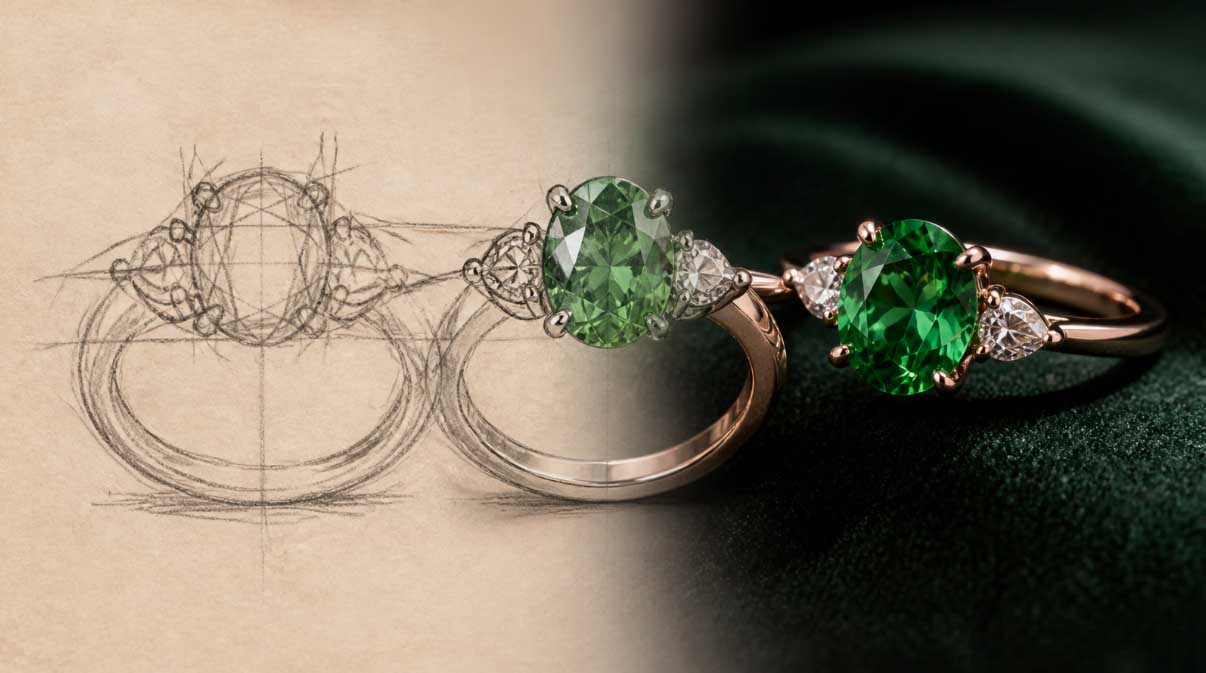

Alternatively, you can use our Custom Bespoke Design service to build your ring from scratch with one of our designers.

How to get a custom made Tsavorite engagement or cocktail ring.jpg

Have three things ready before you start: your stone preference, the ring size, and a budget range. Those three answers let the studio show you realistic options instead of a scattershot of ideas. The Rare Gemstone Company typically replies to a bespoke enquiry within 24 hours, and accepts card and PayPal.


How much does a custom colored-gemstone engagement ring or cocktail ring cost?


The price is driven almost entirely by the stone, not the setting. For rare colored gemstones, the gem itself usually carries most of the cost, and four factors move it: variety, carat weight, color saturation and clarity. A fine untreated Tanzanite or a top-color Tsavorite costs far more per carat than a commercial-grade example of the same size.

Setting and labor add a smaller, more predictable amount on top, varying with metal choice and design complexity. A plain bezel in a standard metal costs less to make than a hand-detailed halo with accent stones. Because a cutter-led studio prices the stone and the work separately, you can see where the money goes and adjust: step down a quarter carat, or choose a cleaner stone in a smaller size, to land on your budget. 

The metal you choose is also a factor, obviously, especially as gold prices are near historic highs right now. 

The advantage of our “Design Your Own” Jewelry Design wizard is that it lets you play with different gemstones and settings and metals and calculates the price “on the fly” so that you can get a good idea of price of many different options immediately without having to wait for quotes.


Why choose a colored gemstone over a diamond?

A colored gemstone gives you a ring nobody else is wearing, at a wider range of price points, in a color you actually chose. Diamonds are graded on a narrow, well-known scale, which makes them easy to compare and easy to duplicate. A fine Tanzanite or Tsavorite is rarer in the ground than most diamonds of the same size, yet it stands out for its color rather than its certificate.
The trade-off is hardness and care, which is why the variety you pick matters more than with a diamond. Choose a sapphire, ruby or spinel and you get near-diamond durability with a distinct color. Choose a softer stone like Tanzanite and you accept a protective setting and gentler handling in exchange for a color no other gem produces. Decades of cutting rare stones is what tells a studio which trade-off suits your lifestyle; read more on the company's background.

Frequently asked questions

Can you make a custom engagement or cocktail ring without a diamond?


Yes. A bespoke engagement ring can be built entirely around a colored gemstone such as Tanzanite, Tsavorite, sapphire, ruby or spinel, with no diamond center. In actual fact, most engagem,ent rings used to contain colored stones before De Beers cornered the market with their “Diamonds are Forever” cmarketing campaign. Accent diamonds are optional, not required. The Rare Gemstone Company designs rings around the colored stone through its Jewelry Design Wizard or custom Bespoke CAD Design service.

Is a Tanzanite engagement ring a good idea for daily wear?


Tanzanite works for daily wear if it is set to protect the stone, because at Mohs 6 to 7 it is softer than a diamond or sapphire. A bezel or low-profile halo shields the edges from knocks far better than high exposed prongs. If you want Tanzanite in a piece that sees less impact, a pendant or earrings are a longer-lasting choice.

What is the most durable colored gemstone for an engagement ring?


Sapphire and ruby are the most durable colored gemstones for an engagement ring, both at Mohs hardness 9, just below diamond. Spinel at Mohs 8 is the next strongest and a rare, under-recognized alternative. All three handle daily wear in any setting style.

How long does it take to get a custom bespoke engagement or cocktail ring made?


Timing depends on the stone and the design, but the studio typically responds to a bespoke enquiry within 24 hours to confirm options and next steps. Sourcing or cutting a specific rare stone can extend the full timeline. Share your stone preference, ring size and budget early so the build can start without back-and-forth.

Where can jewelry buyers seeking rare stones start a custom ring order?


You can start immediately with on our “Design Your Own” Jewelry Design Wizard or on our Custom Bespoke CAD Design engine.
markets.
ABOUT THE AUTHOR Nicky Thomas

Educated at the University of Exeter and a key part of our team here at The Rare Gemstone Company, Nicky has been fascinated by gemstones and jewelry since childhood. She explores all areas of the industry in her blog and revels in the proximity to gems and jewels that working at the source of some of the world’s most beautiful and rarest gemstones provides her.

Latest Articles

Aquamarine – The Birthstone for March

Aquamarine is the official March Birthstone, reminiscent of the of the sea and believed to be a powerfully soothing influence on relationships, hence why it is considered to be such a perfect gift and one of the world's favorites

Tourmaline - The October Birthstone

If you were born in October you are very fortunate indeed to have such a stunning and versatile gemstone as your birthstone.

Blue Gemstones - A Comprehensive Look into the Finest Blue Stones

The phrase “September blues” often evokes feelings of melancholy and nostalgia. The skies change and the bright, intense summer sky gives way to softer, more muted shades of blue. Not surprisingly this reflects several gemstones all a spectrum of Blue

The Definitive Guide to Birthstones

There has always been a human “need” to own and wear minerals that have been believed to be sacred or special and this has spurred us to collect them. Perhaps this is the lure to have our birth month represented by a wonderful natural mineral

We're the talk of the town