Tsavorite costs $100–$2,000 per carat; fine stones over 2 ct run $2,500–$8,000. See 2026 prices by size and quality, plus price rises since 2011.

GIA Graduate Gemologist
ICA Ambassador to Kenya
The short answer: most Tsavorite sells for about $100 to $2,000 per carat. Fine stones over 2 carats cost $2,500 to $8,000 per carat, and exceptional stones over 5 carats can pass $10,000 per carat. This guide explains what sets the price of a Tsavorite, from the miner’s parcel to the finished stone in a jeweler’s window.
The table shows typical retail prices per carat as of November 2026. Find your stone’s size band, then judge which quality column it belongs in. To get the total price, multiply the price per carat by the weight: a 2.50 carat fine stone at $2,500 per carat costs $6,250.
| Carat weight | CommercialLight, yellowish or very dark; visible inclusions | FineMedium to medium-dark pure green; eye-clean | Top gemVivid green, GIA tone and saturation 5 to 6 |
|---|---|---|---|
| Under 1 carat | $100 to $400 | $400 to $1,000 | $1,000 to $2,000 |
| 1 to 2 carats | $200 to $600 | $1,000 to $2,500 | $2,500 to $5,000 |
| 2 to 3 carats | $300 to $800 | $1,500 to $3,500 | $3,500 to $6,000 |
| 3 to 5 carats | $400 to $1,000 | $2,500 to $5,000 | $5,000 to $8,000 |
| Over 5 carats | $500 to $1,500 | $4,000 to $8,000 | $8,000 to $15,000+ |
Prices in US dollars per carat, retail, November 2026. Ranges compiled from published dealer price guides and the GemGuide wholesale index. Prices from a mine-to-market dealer usually sit at or below the low end of each band.
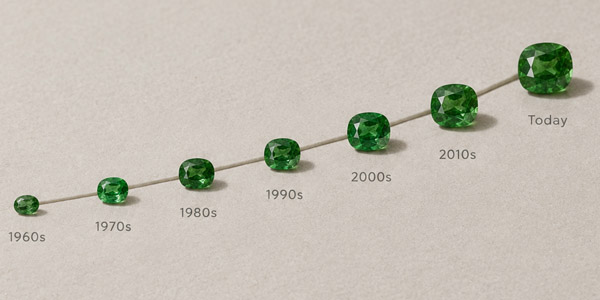
Tsavorite’s price per carat rises steeply with size. In the wholesale market, a top-grade stone of 5 to 10 carats now costs about $8,500 per carat, against about $1,550 for a 1 to 2 carat stone of the same quality.
Wholesale price per carat, top grades, US dollars, 2026.
The reason is geology. Most Tsavorite crystals are small and fractured, so clean rough big enough for a 3 carat stone is rare, and rough for a 5 carat stone is exceptional. Stones up to 1 carat are fairly common, fine stones over 2 carats are rare, and fine stones over 3 carats are very rare. The large sizes have also gained the most value, as the next section shows.
Prices step up at the round numbers. A 2.05 carat stone usually costs noticeably more per carat than a 1.95 carat stone of the same quality, so a stone just under a threshold can be a good buy.
Top-grade Tsavorite has become much more expensive since 2011, and the larger the stone, the bigger the rise. Wholesale prices for fine 5 to 10 carat stones have nearly tripled, from about $3,000 to $8,500 per carat. Fine 3 to 5 carat stones have more than doubled.

| Carat weight | 2011USD per carat | 2026USD per carat | Rise since 2011 | Average per yearCompound, 15 years |
|---|---|---|---|---|
| 1 to 2 carats | $1,250 | $1,550 | +24% | 1.4% |
| 2 to 3 carats | $2,000 | $2,250 | +13% | 0.8% |
| 3 to 5 carats | $2,500 | $5,250 | +110% | 5.1% |
| 5 to 10 carats | $3,000 | $8,500 | +183% | 7.2% |
Source: GemGuide wholesale price index, top grades. Percentages calculated from the index figures.
The split follows supply. Fine stones under 3 carats still come out of the ground in reasonable numbers, so their prices have only edged up. Clean rough big enough for a 3 or 5 carat stone has always been scarce, and output from the main mines has been limited and irregular, so the supply of large fine stones has not kept up with demand.
These are wholesale figures for the finest grades, not resale values. They show where the market for top Tsavorite has moved, but a stone bought at retail will not necessarily resell for more. For a buyer, the practical point is that a fine stone over 3 carats is unlikely to get cheaper.
Color accounts for more of a Tsavorite’s price than any other factor. Two 2 carat stones of identical clarity can differ in price by five times or more on color alone. Gemologists judge color in three parts:
Mint garnet, a pale green grossular from the same deposits, is attractive but priced well below Tsavorite. Put color first: a smaller stone with superb color is worth more, and looks better, than a larger one with a weak or overly dark green.
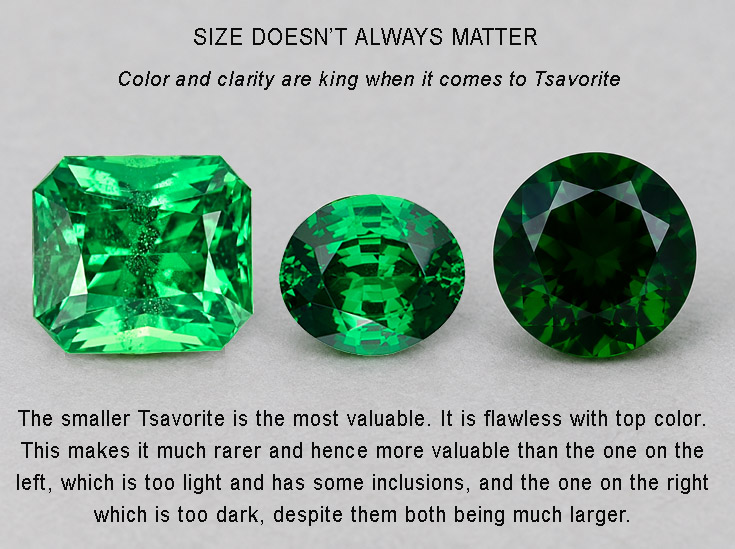
Clarity. GIA classes Tsavorite as a Type II gem, meaning it usually has some inclusions. A top-grade stone does not have to be flawless under a loupe, but it should be eye-clean. Loupe-clean stones carry a premium, especially above 2 carats, and visible inclusions can halve the price.
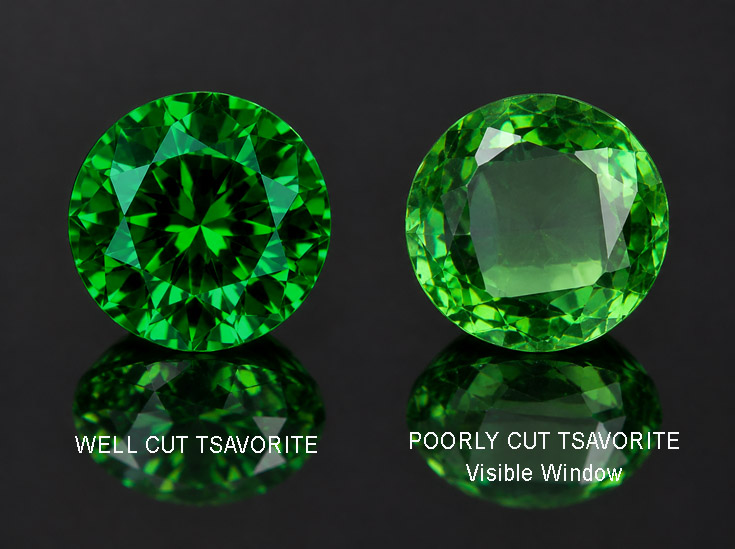
Cut. Much Tsavorite rough is cut near the mine to keep as much weight as possible, leaving deep, lopsided stones with dark areas or a window. A precision cut gives up some carats but returns far more brilliance. A heavy, poorly cut stone may cost less per carat, but you are paying for weight you cannot see.
Treatment. Tsavorite is not heated, oiled or filled, and no lab-grown Tsavorite is sold commercially. That sets it apart from emerald, where clarity enhancement is standard practice.
The same Tsavorite can sell for very different prices depending on how many hands it passes through. On a typical route a stone changes hands five or more times between the mine and the buyer, and each step adds its own margin.
A dealer who buys rough at the mine and cuts in-house removes most of these steps. That is why fine Tsavorite from a mine-to-market specialist often costs a fraction of what a chain jeweler charges for a comparable stone.
Each step adds a margin to the price.
Fewer margins, and the people selling the stone are the people who cut it.
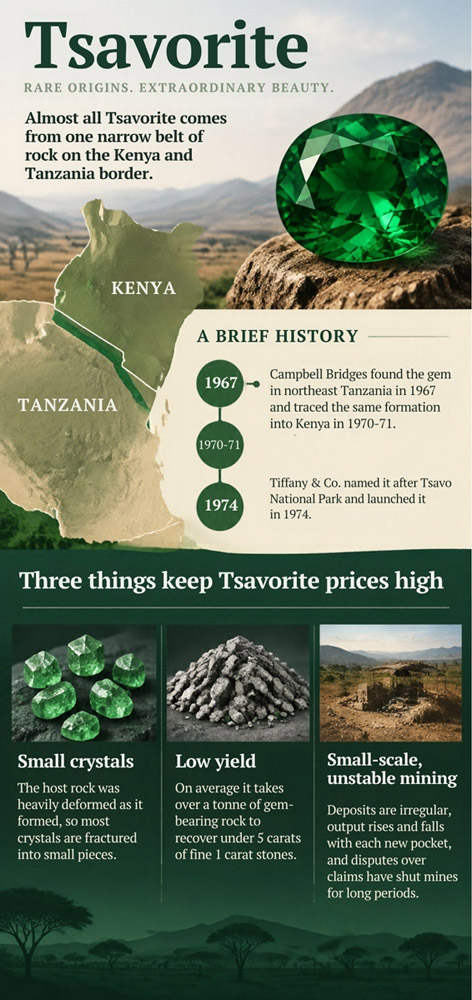
Almost all Tsavorite comes from one narrow belt of rock on the Kenya and Tanzania border, mined by small operations with unpredictable output. Campbell Bridges found the gem in northeast Tanzania in 1967 and traced the same formation into Kenya in 1970–71. Tiffany & Co. named it after Tsavo National Park and launched it in 1974.
Three things keep prices high:
That is the main reason fine Tsavorite prices have risen steadily for two decades.
Bought as rough at the source and cut in-house, without the usual chain of middlemen.
Browse Our TsavoriteYes. For the same look, fine Tsavorite costs much less than fine emerald and much less than fine demantoid. In many ways it is also the more practical stone.
| Tsavorite | Emerald | Demantoid | |
|---|---|---|---|
| Fine price | Several times cheaper than emerald of similar color | Fine Colombian stones often 5–10× the price of Tsavorite | Higher than Tsavorite; large fine stones far higher |
| Hardness (Mohs) | 7 to 7.5 | 7.5 to 8, but brittle | 6.5 to 7 |
| Treatment | None | Oil or resin clarity enhancement is standard | Sometimes heated |
| Clarity | Often eye-clean | Usually visibly included | Often included; “horsetail” inclusions prized |
| Brilliance | High (RI about 1.74) | Moderate (RI about 1.58) | Very high fire |
| Large sizes | Rare above 3 carats | Available in large sizes | Very rare above 2 carats |
Emerald still has more history and name recognition, and large emeralds are easier to find. But for a vivid, durable, untreated green gem, Tsavorite gives far more for the money. Demantoid offers more fire, but it is softer, harder to source and even rarer in large sizes.
A fair price matches the stone’s color, size, clarity and cut against the table above. These checks catch most problems:
A fine 1 carat Tsavorite typically sells for $1,000 to $2,500 at retail. A top-gem stone can reach $5,000, while a commercial stone may be a few hundred dollars.
A fine 2 carat stone usually costs $1,500 to $3,500 per carat, so roughly $3,000 to $7,000 in total. Top color pushes it higher.
It comes almost entirely from one small area of Kenya and Tanzania, its crystals are usually small and fractured, and mining is small-scale. Clean stones over 2 carats are genuinely rare.
No. Fine Tsavorite is usually several times cheaper than a fine emerald of similar color. It is also harder-wearing in practice and untreated.
Yes, especially for large stones. Since 2011, wholesale prices for top-grade 5 to 10 carat Tsavorite have risen 183%, from about $3,000 to $8,500 per carat, and 3 to 5 carat stones have risen 110%. Stones under 3 carats rose more modestly, by 13 to 24%.
Fine Tsavorite has held and grown its value well, but it is not a liquid asset. There is no public exchange, resale goes through dealers at below-retail prices, and returns depend on buying a fine stone at a fair price. Buy it mainly because you love it.
No commercial treatments are used on Tsavorite, and no lab-grown Tsavorite is on the market. Imitations exist, mainly green glass and synthetic spinel.
A pure, vivid green of medium-dark tone, around GIA tone and saturation 5 to 6. Stones that are too pale (mint) or too dark (blackish) are worth less.
Whether you’re considering one of ours or comparing a stone from elsewhere, we’re happy to talk it through. Call 407 974 7565 or get in touch, and we’ll reply within 24 hours.
Contact Us
Antony completed his GG (Graduate Gemologist) in 1998 at the Gemological Institute of America in California after a degree a Business at the University of Bath, in England. He has extensive experience in the colored gemstone trade with over 20 years buying rough at the source. He is currently the Ambassador to Kenya for the ICA (International Colored Gemstone Association) in New York which is the worldwide body for colored gemstones.
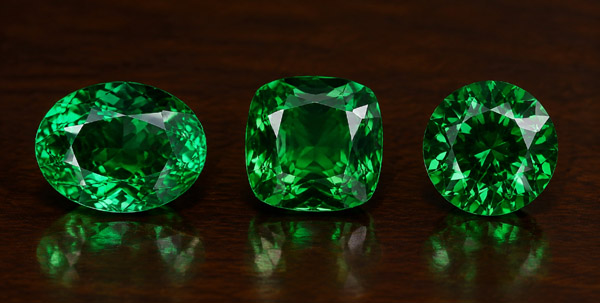
Chains rarely stock fine Tsavorite, so buy from specialists who cut their own rough and disclose origin, treatment, and inclusions

Everything you need to know about tanzanite: color grades, price per carat, heat treatment, how to spot imitations, history, trichroism and what to check before you buy. Written by GIA gemologists
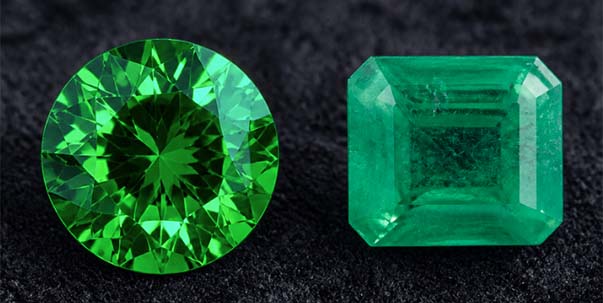
Learn the difference between Tsavorite and Emerald - color, dispersion, brilliance, hardness and more.
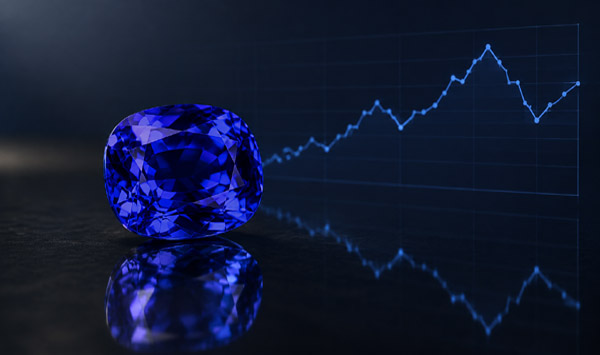
Looking to find out what the prices are in the market in 2026? Or perhaps you'd like to understand price trajectory since the 1990's? This article will bring you up to date.

If you can't find what you are looking for in our regular collections,
submit a Special Request and let us cut / source it for you. You will be
notified by email if we find a gem that matches your specs.

Your Product has been successfully added to the cart.
Thank You for submitting a Special Request .
We will notify you by email when we find gems that match your specifications and may interest you.
You can see and manage your special requests in your account by loggin into your account and clicking on the link Special Requests.
MESSAGE SENT
We will respond shortly
FRIEND REFERRAL ADDED SUCCESSFULLY
Our system has opened them a Member's Account and sent them
an introduction email. If they purchase off the site, 6% of the sale
will automatically be credited to you EAG Account Statement
NO ITEMS FOUND WITH THAT ID