Looking to find out what the prices are in the market in 2026? Or perhaps you'd like to understand price trajectory since the 1990's? This article will bring you up to date.

GIA Graduate Gemologist
ICA Ambassador to Kenya
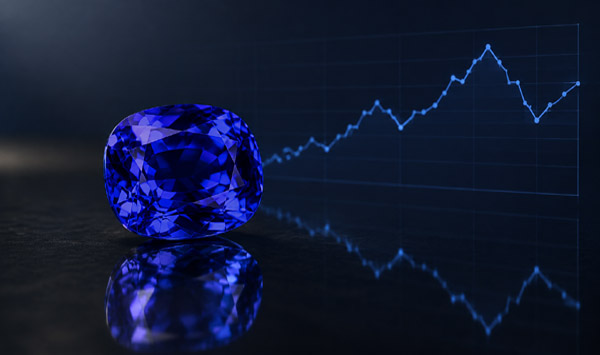
In 2026, most tanzanite sells for between about $100 and $1,500 per carat. Where a stone falls in that range depends mainly on its color grade, then on its clarity, cut and size. Unlike diamond, tanzanite’s price per carat rises only modestly with size. Below are current prices by grade and carat weight, what moves them, and how tanzanite prices have behaved since the gem was discovered in 1967.
Between about $100 per carat for B grade stones and $1,500 per carat for the finest investment grade stones of 10 carats and over. The chart shows prices we currently observe across the market. Each range reflects different sellers and different markups along the supply chain.
| Carat weight | Investment gradeFinest 1% mined | AAA grade | AA grade | A grade | B grade |
|---|---|---|---|---|---|
| 0.00 to 1.99 carats | $600 to $700 | $425 to $480 | $300 | $200 | $100 |
| 2.00 to 2.99 carats | $750 to $1,350 | $500 to $550 | $325 | $250 | $150 |
| 3.00 to 9.99 carats | $780 to $1,380 | $550 to $575 | $350 | $275 | $170 |
| 10 carats and over | $800 to $1,500 | $580 to $590 | $400 | $300 | $190 |
Prices assume good cutting and proportions, and VVS clarity. Adjust for cut and clarity as below.
Because large tanzanite crystals are not especially rare; fine color is. In the chart, an investment grade stone rises from $600 to $700 per carat under 2 carats to $800 to $1,500 per carat at 10 carats and over. A B grade stone moves from $100 to just $190. With diamond, and with gems such as Tsavorite, the price per carat jumps sharply at each size threshold, because large clean crystals are far scarcer.
Tanzanite’s price is also set more directly by supply and demand. Diamond prices have long been shaped by a handful of large producers that manage how much rough reaches the market. Tanzanite has no such controller: it comes from many small and medium mines in one area of northern Tanzania, so prices move with how much is mined and how much buyers want.
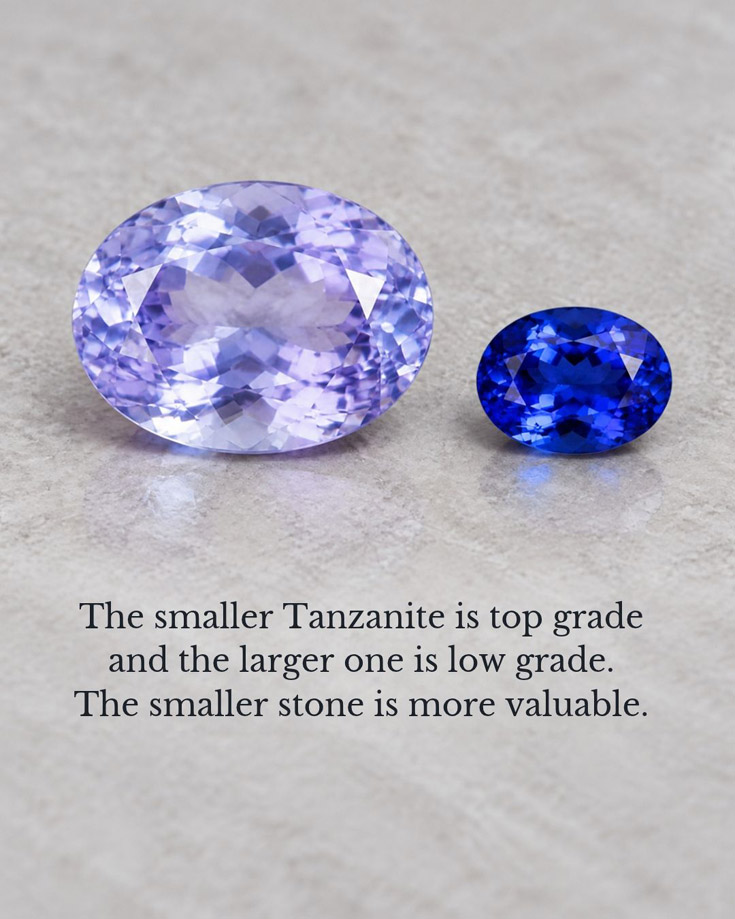
Because every business between the mine and the buyer adds a margin. A stone bought from a luxury brand on a high street has usually passed through a rough dealer, a cutter, a wholesaler and a retailer, and carries the brand’s premium on top. The same quality bought closer to the source costs less.
That is why each range in the chart is wide. To compare prices fairly, match the grade, carat weight, cut and clarity, and ask for a written statement of treatment. A much lower price is only a bargain if the stone really is the same quality.
Each step adds a margin to the final price.
Fewer margins for the same quality of stone.
Every tanzanite in our collection is listed with its grade, weight and price, so you can check it against this chart.
Browse Our TanzaniteTanzanite prices have moved in waves, driven mostly by supply from the mines, by politics in Tanzania and by demand in the United States, its largest market. Through every downturn so far, the finest grades have held their value far better than lower grades.
Tiffany & Co. named tanzanite and launched it in 1968, and for its first years was effectively its only major marketer. Supply from the young mines was low and sporadic. Tanzania was then a socialist state under President Julius Nyerere, and mineral wealth belonged to the state, which held back investment in mining. Prices stayed high as demand grew in the US and elsewhere.
As Tanzania opened its economy, production stabilized and rose, and prices fell. Then, in November 2001, the Wall Street Journal alleged that tanzanite smuggling was helping to fund al Qaeda. QVC, Zales and other major US retailers suspended sales, and prices collapsed.
In February 2002 the US State Department said it had seen no evidence that tanzanite sales were funding al Qaeda, and retailers restocked. Prices then surged: medium to medium-fine goods rose from lows of about $200 per carat to $600 and more.
Medium-fine and lower grades fell 20% to 30%, and the lowest grades lost up to half their value by 2009. The finest grades were barely affected, supported by very low supply and steady demand from the highest earners.
By 2013 prices had returned to their pre-recession levels, and the finest stones began to edge upwards again, a trend that continued on and off for several years.
President John Magufuli’s government took a far more interventionist line on mining. It accused mining companies of under-declaring production, and in April 2018 inaugurated a 24 km wall around the Merelani mining area to curb smuggling. Officially recorded production rose as more of the trade went through official channels, but for international buyers the supply of rough became tighter and less predictable.
Magufuli died in office in 2021. His successor, President Samia Suluhu Hassan, has introduced reforms aimed at transparency, licensing small-scale miners and faster payment at official tanzanite markets, and mining investors view her government more favorably. Even so, supply of fine material remains tight, partly because the mines are now very deep and increasingly difficult to work.
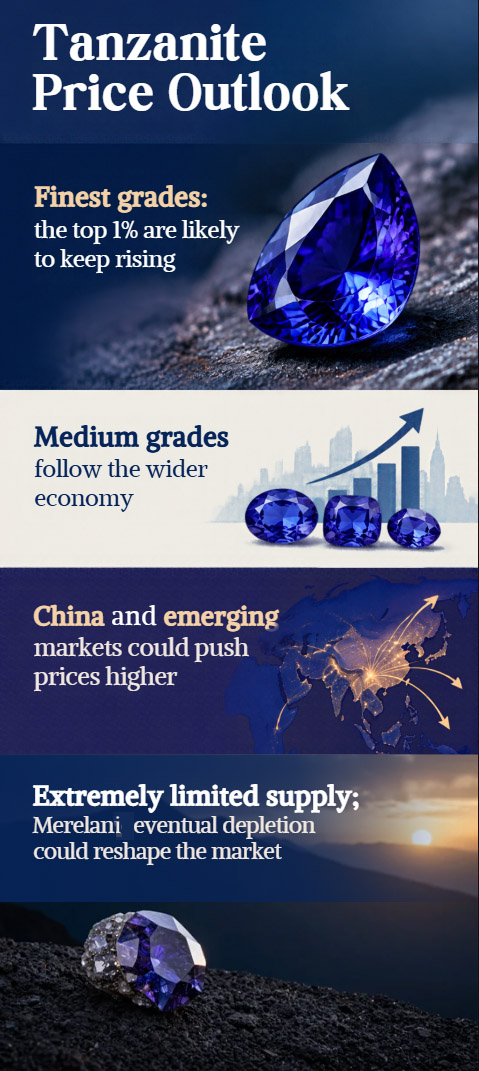
In our view, the finest grades are likely to keep rising, while medium grades will continue to follow the wider economy. Prices for medium and medium-fine stones depend mostly on the spending power of middle-class buyers in the US, still the largest market. Growing demand in China and other emerging markets is a wild card that could push prices higher.
The finest stones are a different story. Supply is extremely limited, and demand comes mainly from high earners in the US and Asia, the same buyers who have pushed fine ruby and emerald to record prices at auction. The biggest change is expected when the Merelani deposit is finally mined out, since no other source has ever been found.
This is an outlook, not a promise. Gem prices can fall as well as rise, and lower grades in particular have been volatile in the past.
Based on 2026 market prices, a 1 carat tanzanite with good cutting and VVS clarity is worth roughly $100 for a B grade stone and up to about $700 for an investment grade stone, the finest 1% of material mined. Most fine stones sit in between, at around $300 to $480.
Stones of 3 to 9.99 carats sell for about $170 to $1,380 per carat in 2026, depending on grade. A 5 carat tanzanite is therefore worth roughly $850 for a B grade stone and up to about $6,900 for an investment grade stone, assuming good cutting and VVS clarity.
Price depends on demand as well as rarity. Diamond has a huge global market built over a century of marketing, and its supply has historically been managed by a few large producers. Tanzanite was only discovered in 1967 and its market is far smaller, so its price responds more directly to supply and demand.
No. Nearly all tanzanite on the market is heat treated to reveal its blue-violet color. The treatment is permanent and accepted across the trade, so market prices, including those in this guide, already reflect it.
The finest grades have held their value well through past downturns, and supply comes from a single small area, which many in the trade expect to be mined out within a generation. But prices can fall as well as rise, lower grades have been volatile, and gemstones are harder to sell than financial assets. Treat tanzanite as a long-term purchase you also enjoy, not a guaranteed return.
Many in the trade expect the price of fine tanzanite to rise significantly once the Merelani deposit is exhausted, because no other source has ever been found. This is an expectation, not a certainty, and the timing is unknown.
Browse our investment collection, or call 407 974 7565 for a second opinion on any stone or price. We reply within 24 hours.
Tanzanite Investment Collection Contact Us
Antony completed his GG (Graduate Gemologist) in 1998 at the Gemological Institute of America in California after a degree a Business at the University of Bath, in England. He has extensive experience in the colored gemstone trade with over 20 years buying rough at the source. He is currently the Ambassador to Kenya for the ICA (International Colored Gemstone Association) in New York which is the worldwide body for colored gemstones.
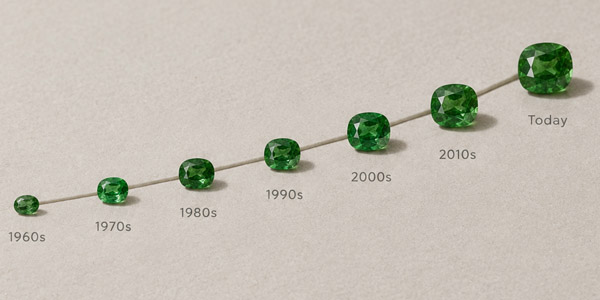
Tsavorite costs $100–$2,000 per carat; fine stones over 2 ct run $2,500–$8,000. See 2026 prices by size and quality, plus price rises since 2011.
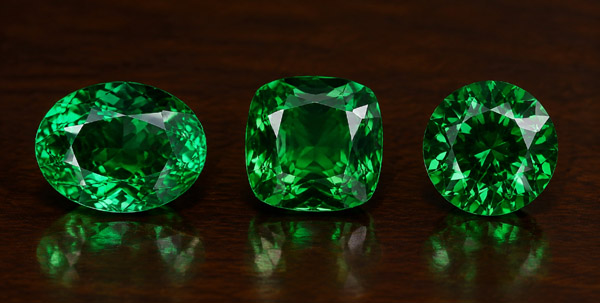
Chains rarely stock fine Tsavorite, so buy from specialists who cut their own rough and disclose origin, treatment, and inclusions

Everything you need to know about tanzanite: color grades, price per carat, heat treatment, how to spot imitations, history, trichroism and what to check before you buy. Written by GIA gemologists
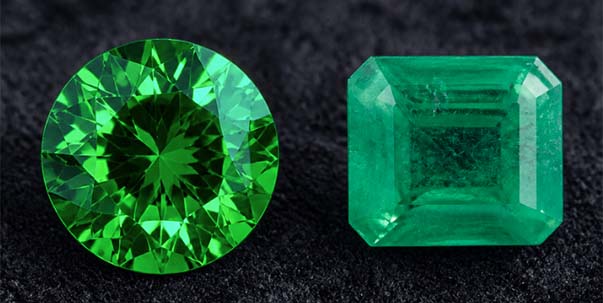
Learn the difference between Tsavorite and Emerald - color, dispersion, brilliance, hardness and more.

If you can't find what you are looking for in our regular collections,
submit a Special Request and let us cut / source it for you. You will be
notified by email if we find a gem that matches your specs.

Your Product has been successfully added to the cart.
Thank You for submitting a Special Request .
We will notify you by email when we find gems that match your specifications and may interest you.
You can see and manage your special requests in your account by loggin into your account and clicking on the link Special Requests.
MESSAGE SENT
We will respond shortly
FRIEND REFERRAL ADDED SUCCESSFULLY
Our system has opened them a Member's Account and sent them
an introduction email. If they purchase off the site, 6% of the sale
will automatically be credited to you EAG Account Statement
NO ITEMS FOUND WITH THAT ID