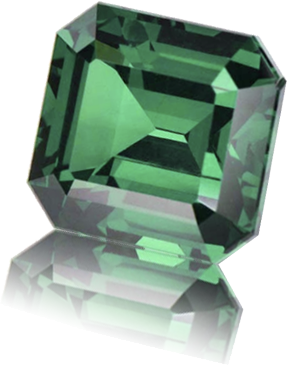
Learn the difference between Tsavorite and Emerald - color, dispersion, brilliance, hardness and more.

GIA Graduate Gemologist
ICA Ambassador to Kenya
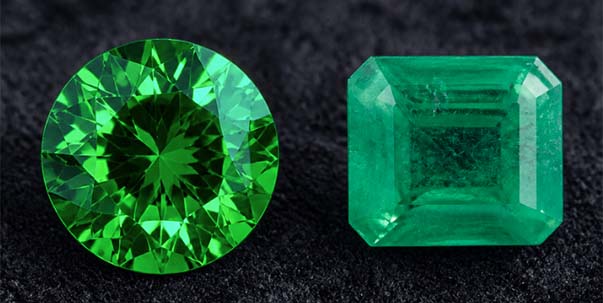
Tsavorite and emerald are both green, but they are different stones with different chemistry, brilliance, and durability. If you are weighing a green gem for a ring or a collection piece, the choice comes down to how much fire you want, how the stone will hold up to daily wear, and whether you accept the heavy treatment most emeralds carry. Here is a direct, gemologist's comparison for collectors of fine gemstones and jewelry buyers seeking rare stones.
Key takeaways
• Tsavorite has a higher refractive index (1.74) than emerald (1.57) and double the dispersion (0.028 vs 0.014), so a well-cut tsavorite returns more light and more fire.
• Tsavorite is a green grossular garnet; emerald is a green variety of beryl. They only look alike at a glance.
• Most tsavorite is sold untreated, while most commercial emerald is oil-filled or resin-filled to hide fractures, which changes how each stone should be cared for.
• Tsavorite was discovered in the early 1970s in East Africa and is far rarer at the source than emerald, yet usually costs less per carat than fine emerald.
Tsavorite and emerald are different mineral species that happen to share a green color. Tsavorite is the vivid green variety of grossular garnet. Emerald is the green variety of beryl, colored by chromium and sometimes vanadium. That difference in chemistry drives everything else: brilliance, hardness, clarity, and how each stone is treated before it reaches a buyer.
Tsavorite is one of the newer gems in the trade. According to Geology Science, it was discovered in the early 1970s and takes its name from the Tsavo area in Kenya, with deposits in both Kenya and Tanzania. Emerald has been mined and prized for thousands of years, with famous sources in Colombia, Zambia, and more recently Ethiopia. For context on the newer beryl source, see our note on Ethiopian emerald as a new source.
Here is how the two stones line up on the properties that matter most to a buyer.
PROPERTY TSAVORITE EMERALD Mineral Species Grossular Garnet Beryl Cause of Color Vanadium/Chromium Chromium/Vanadium Refractive Index 1.74 1.57 Dispersion (fire) 0.028 0.014 Mohs Hardness 7 to 8 7 to 8 Toughness Good Poor Typical Treatment None Commonly oiled or resin fill
Tsavorite is more brilliant and shows more fire than emerald. The reason is optical, not opinion. Tsavorite's refractive index of 1.74 is considerably higher than emerald's 1.57, which means more light bends back toward your eye instead of passing through the stone. On top of that, tsavorite's dispersion is 0.028, double emerald's 0.014. Dispersion is the quality that splits white light into spectral colors, the "fire" you see as flashes of color when the stone moves.
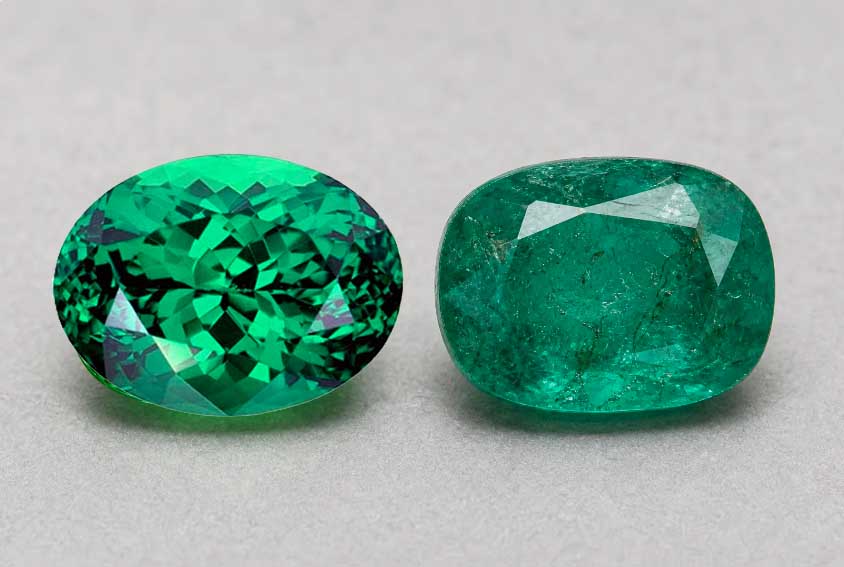
In practice this means a tsavorite cut by a skilled lapidary sparkles with a liveliness emerald rarely matches. Emerald owes much of its beauty to its deep, saturated color rather than to light return, and most emeralds are cut in the step-cut "emerald cut" partly to protect the brittle, included rough rather than to maximize sparkle.
If you want a green stone that reads as bright and lively in ordinary room light, tsavorite has the physical advantage. If you are drawn specifically to the soft, velvety green that emerald is famous for, that look is harder to reproduce in any other gem.
Tsavorite is the safer choice for a ring you wear every day, even though emerald is slightly harder on the Mohs scale. Hardness only measures resistance to scratching. Toughness, the resistance to chipping and cracking, matters more for rings, and this is where emerald is weak.
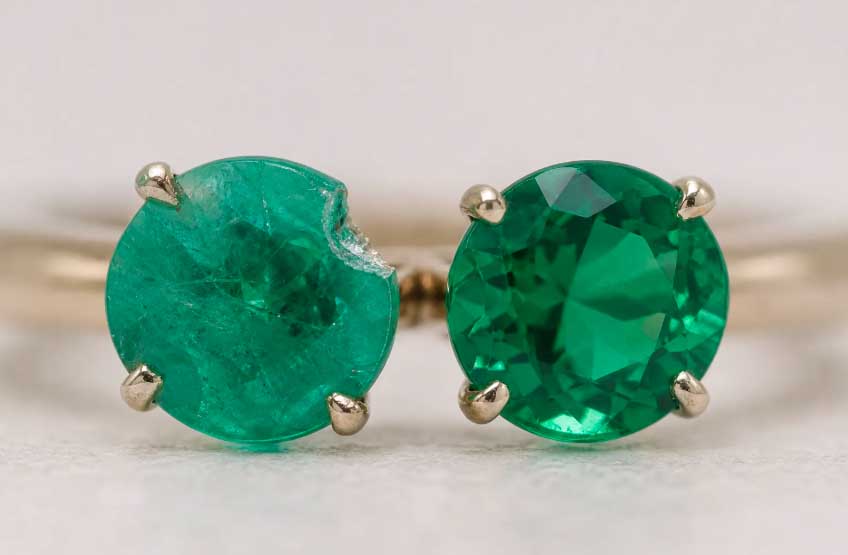
Emerald is famous for its internal fractures, often called "jardin" (French for garden). These fissures make the stone brittle and prone to chipping at the edges, which is why jewelers handle emeralds with extra care and warn against ultrasonic cleaners. Tsavorite is a cleaner, tougher crystal with no cleavage plane to split along, so it tolerates daily knocks better.
Care routines differ for the same reason. Because most emerald is oil-filled or resin-filled to mask those fractures, heat, solvents, and ultrasonic cleaning can dry out or strip the filler and make the inclusions more visible over time. Tsavorite, usually sold untreated, needs nothing more than warm water and mild soap. For a close look at what you will and will not see inside a fine green garnet, read our guide to tsavorite inclusions.
Most tsavorite reaches the market with no treatment at all, while most commercial emerald is treated to improve its apparent clarity. This is one of the biggest practical differences between the two stones, and it affects both value and care.
Emerald is routinely oiled, and lower grades are filled with resins or polymers, to reduce the visibility of surface-reaching fractures. The treatment is accepted in the trade when disclosed, graded as "none," "minor," "moderate," or "significant." A fine untreated emerald with strong color is extremely rare and commands a steep premium.
Tsavorite is prized partly because it does not need this. A bright, clean tsavorite is clean by nature, not by a filler that can degrade. When you buy tsavorite you are buying the stone as it came out of the ground and off the cutting wheel, which is why disclosure of treatment is a short conversation for green garnet and a long one for emerald.
Tsavorite is rarer at the source than emerald, but it usually costs less per carat than fine emerald, especially in larger sizes. Both facts are true at once, and they confuse a lot of buyers.
Tsavorite is one of the rarest garnets on earth. The rough tends to come out of the ground in small, broken pieces, so clean stones above a few carats are genuinely scarce and jump in price with size. We cover why in tsavorite, the world's rarest garnet. Despite that geological rarity, tsavorite does not carry the centuries of marketing history and brand recognition that emerald does, so the per-carat price for most sizes stays below top emerald.
Emerald's price ceiling is set by its finest material. A top Colombian emerald with vivid color and minimal treatment is one of the most expensive colored gems in the world. But average commercial emerald, heavily included and heavily treated, is widely available and comparatively affordable. So the honest answer on value is that you compare like for like: an untreated, clean, vivid tsavorite against an untreated, clean, vivid emerald, and the emerald will almost always cost more.
For how to judge color, clarity, and cut when you shop, our tsavorite buying guide walks through what separates a good stone from a great one.
Choose tsavorite if you want maximum brilliance, an untreated stone, and better toughness for a ring you will wear often. Choose emerald if its specific soft green and its long tradition are what you are after and you accept the treatment and extra care that come with it. Both are correct answers for different buyers.
A quick way to decide:
• Pick tsavorite for an engagement ring or a daily-wear piece, where chip resistance and low-maintenance care matter.
• Pick emerald if you specifically want the May birthstone or the classic emerald green, and the stone will sit in a protected setting or see occasional wear.
• Pick tsavorite if you are a collector chasing geological rarity and provenance from a modern East African discovery.
We have cut and sold fine loose gemstones since 1974 and specialize in rare tsavorite and tsavorite jewelry, so this comparison reflects stones we handle at the bench rather than theory. If you want to see how a green garnet looks set, our tsavorite jewelry and tsavorite earrings show it in finished pieces. Alternatively, our unrivalled collection of loose investment grade Tsavorites showcase the finest in the genre.
Not usually, when you compare equal quality. Tsavorite is rarer in the ground, but fine untreated emerald still sells for more per carat because of its color, size potential, and long market history. For average commercial grades, a clean untreated tsavorite often costs less than a comparable emerald while showing more brilliance.
Yes. Tsavorite is a common choice for buyers who want a green stone that is brighter, tougher, and typically untreated. It returns more light and more fire than emerald because of its higher refractive index (1.74) and double the dispersion. The one thing it cannot copy is emerald's soft, velvety green, which is a different hue.
No. Emerald is slightly harder on the Mohs scale, around 7.5 to 8, versus about 7 to 7.5 for tsavorite. But hardness only measures scratch resistance. Tsavorite is tougher in practice because emerald's internal fractures make it brittle and prone to chipping, so tsavorite holds up better in a ring.
They are different species, so a gemologist separates them easily. Tsavorite is grossular garnet with a refractive index of 1.74 and is singly refractive; emerald is beryl at 1.57 and is doubly refractive. To the eye, tsavorite tends to be cleaner and more brilliant, while emerald usually shows visible internal inclusions called jardin..

Antony completed his GG (Graduate Gemologist) in 1998 at the Gemological Institute of America in California after a degree a Business at the University of Bath, in England. He has extensive experience in the colored gemstone trade with over 20 years buying rough at the source. He is currently the Ambassador to Kenya for the ICA (International Colored Gemstone Association) in New York which is the worldwide body for colored gemstones.

New to buying gems? Read our comprehensive Tanzanite Buying Guide. Everything you need to know about Tanzanite. Learn all about this beautiful, rare gemstone. Learn about its properties, how to judge quality, pricing, how it is mined, where it comes from
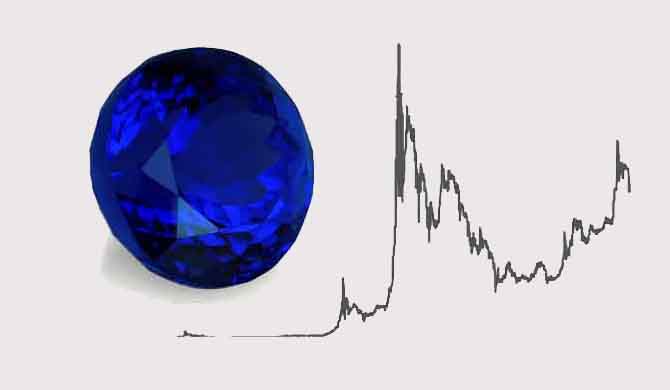
Looking to find out what the prices are in the market in 2026? Or perhaps you'd like to understand price trajectory since the 1990's? This article will bring you up to date.
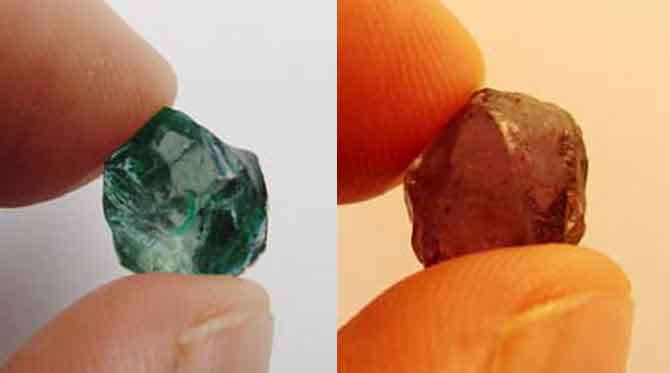
A new discovery in the renowned Taita district of Kenya has taken the gem world by storm. We take a look at the new stone and the discovery.
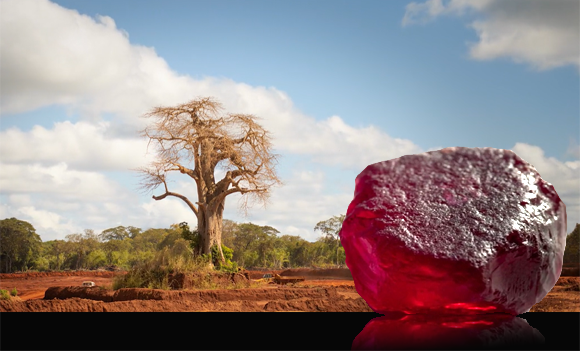
Some of the world's finest and rarest Rubies are now mined in Africa. The traditional sources in Asia have been depleted and there's a new kid on the block. This article delves into the fascinating world of African Rubies, where and how they are mined.

If you can't find what you are looking for in our regular collections,
submit a Special Request and let us cut / source it for you. You will be
notified by email if we find a gem that matches your specs.

Your Product has been successfully added to the cart.
Thank You for submitting a Special Request .
We will notify you by email when we find gems that match your specifications and may interest you.
You can see and manage your special requests in your account by loggin into your account and clicking on the link Special Requests.
MESSAGE SENT
We will respond shortly
FRIEND REFERRAL ADDED SUCCESSFULLY
Our system has opened them a Member's Account and sent them
an introduction email. If they purchase off the site, 6% of the sale
will automatically be credited to you EAG Account Statement
NO ITEMS FOUND WITH THAT ID